media magazine
1. "There is a complicity between the terrorists and the media. These attacks were made for TV: the terrorists didn’t choose a political target, and they showed no interest in political bargaining. Instead, they were using violence for effect, to generate attention and blast their cause on to the international stage"
2. "9/11 was the model here, for both the terrorists and the media. Where Beslan had screaming children, 9/11 had the towers collapsing, bodies falling, expressions of horror on onlookers’ faces. For days afterwards, the papers were filled with images that documented the event from every angle. Radio stations replayed the last calls from victims to their loved ones. Journalists reported the life stories of the dead and the grief of their relatives"
3. "people watching the news at the time were not protected by the usual mediation of the attacks by news reporting...the audience saw events of the day unfold live on air and the public were drawn into the story in a way they had not previously experienced"
4. " This was the first attack on US soil from a non-American source since Pearl Harbour in 1941 "
5. "The ‘war on terror’ was not a war like those that had gone before. The enemy was hidden and unidentifiable and the fear was that they could strike again at any time"
6. "Hollywood’s response was to create heroes. Classical Hollywood narrative provides reassurance and this structure was applied in the retelling of stories which gave us powerful heroes who save the day. These fantasies responded to the post 9/11 context and provided some comfort in a time when danger seemed very close"
mediaguardian
7. "Since Labour came to power in 1997, it has introduced five major pieces of terrorism legislation: the Terrorism Act 2000; the Anti-Terrorism, Crime and Security Act 2001; the Prevention of Terrorism Act 2005; the Terrorism Act 2006; and the Counter-Terrorism Act 2008"
8. "planning to attack the Danish newspaper that printed cartoons portraying the prophet Muhammad"
empire online
9." Though the style is low-key and the comedy deadpan, what these guys are about is absolutely real: nail bombs, explosives, collateral damage, the whole nine yards. But the genius of this film is to take us into their world; we don't know what the motives are, or how they came to be radicalised, but we do know that they've assembled into a half-arsed cell by the time we meet them"
10. "conflicting emotions while the one-liners are flowing that the only thing you can do is give in to its demented logic and laugh"
11. "The traditional, liberal way to deal with anything as bold and brilliant as this is to look for the flaws, to find that bit of the canvas that isn't quite shaded and say, 'Look! There's a bit missing!"
used quotes:
12. "suggests that our knowledge of the world is constructed by media representations"
Andrews, M. Burton, J. Stevenson, E. (2009). p. 182
13. "ethnic minorities are continually misrepresented by racial (and racist) stereotypes"
Laughey, D. (2009). p. 78.
14. "Media stereotyping occurs when the roles and behaviour on personal characteristics of a particular group are portrayed in a limited fashion"
Williams, K. (2003). p. 131.
15. "“The hegemonic model acknowledges that much of the media is controlled by a relatively small group of people (who are generally male, middle class and white) and that the viewpoints associated with these groups inevitably become embedded in the products themselves.”
Baker, J. Clark, V. Lewis, E. (2003). p. 113.

Sunday, 2 January 2011

task three - historical text analysis and research
How has society has changed over the years and how these changes are reflected in different media texts?
die hard 2:
differences
- terrorism is set in America
- the terrorists are Russian or eastern European
- they have many more fire arms and tend to have a well planned strategy
- the terrosists are white
- english speakers vs non english
- equilibrium to disequilibrium to enquilibrium
- sense of comedy within seriousness
- 1 man against the world
- hero is the police man, who is shwon to be average
reasons why:
- in reality we have become accustomed to terror
- we accept that one day terrorits will strike
- 9/11, 7/7 have occured in the past
- media producers have up to date issues and debates to focus on
task two - additional book reading
books to refer to:
1. FERGUSON, ROBERT Representing 'Race' : Ideology, Identity And The Media
2. GAUNTLETT, DAVID Media, Gender and Identity
3. LACEY, NICK Image and Representation / Key Concepts in Media Studies
4. MACKINNON, KENNETH Representing Men
5. MALIK, SARITA Representing Black Britain: Black And Asian Images On Television
6. POOLE, ELIZABETH, media representations of british muslims
7. Muslims and the news media, Elizabeth Poole
1. FERGUSON, ROBERT Representing 'Race' : Ideology, Identity And The Media
2. GAUNTLETT, DAVID Media, Gender and Identity
3. LACEY, NICK Image and Representation / Key Concepts in Media Studies
4. MACKINNON, KENNETH Representing Men
5. MALIK, SARITA Representing Black Britain: Black And Asian Images On Television
6. POOLE, ELIZABETH, media representations of british muslims
7. Muslims and the news media, Elizabeth Poole
task one - textual analysis
issues and debates
1. representation and stereotyping
clip represents the terrorist to be uneducated and also lacking common sense. it may highlight the audiences view of the terrorists- one view which shows them to be lead astray by their partners in crime, and dealing with the pressure of being bullied and then being compelled to take the necessary action but stereotypically being unsuccessful.
2. post 9/11 and the media
media portrays the terrorists to be motivated to cause destruction, however the ways they approach the plans are chosen to be comic. this is backed up by the idiotic remark made by the characters-'i used different voices every time i go in'.
theories
1. gender and ethnicity
the men are show to be narrow minded. they wish to become terrorists but ironically, in this clip, are shown to be hopeless as they seem to fail the tasks they are given. the emphasis on the ethnicity is bought upon by the use of the traditional Muslim clothing long with the head piece
2. cultivation theory
media is using the Muslim men, and the one white converted Muslim to be shown as terrorists. in this clip a wide variety of ethnicity's are represented-all to be sinning, but believing that they are doing right.
3. hypodermic needle
this theory is key in this clip. the Muslim men are portrayed to be terrorists working in the UK, and the audience, despite acknowledging the production is of the comedy genre, are passive. a negative portrayal of all Muslims is made and this may cause division in terms of segregation.
migrain
M
connotations of the chemicals reinforce that they are terrorists
zoom on fessels face emphasises his idiotic statements
diegetic sound through the camera that one character is holding
I
non Hollywood production, film4
independent cinema
dumbing down of characters and the terrorists projects
no star studded line up
G
comedy genre
setting is of everyday city life, UK
one off production
well known sound track used to portray the binary opposition between actions and views
R
Muslim men
unfair, does not represent society
racist portrayal
challenges stereotypes- one of the men is not a terrorist
A
men and women, 16-35
wide ethnicity's- some may be offended
entertainment may cause moral panic
I
not multi cultural
focus on one culture- negative
encourage social change
shown to be traditional values of terrorism
N
chronological narrative
equilibrium to disequilibrium
all protagonists are shown to be villains
violent intentions
Wednesday, 24 November 2010
The media stereotype of oppressive, intolerant Muslim men and its real world implications
research, a good essay to refer to:
When Muslims (and male Muslims in particular) appear in Western media, whether it be news or fictional entertainment, their images are largely negative, the most popular contexts being violent demonstrations or terrorist acts. Muslim men are often depicted as intolerant religious extremists, culturally narrow-minded anti-Western types, misogynists, or all three rolled up into one. True, such people do exist, and I am not at all saying that Western media cannot talk about them. But the media has a duty to provide the bigger picture, that is, they should also balance their reporting with more positive stories such as on CNSNews.com, and . Both stories are from 2005, but it is not the first time that Indonesian Muslim leaders have organized Muslims to defend non-Muslims against Islamic extremists.
In the Middle East too, there are positive stories to be told. For example, in the recent bird flu outbreak in Turkish, Muslim clerics and their pulpits were a key part of the outreach campaign aimed at educating the general population about health risks. Of course, some people may argue that Turkey and Indonesia are more moderate Islamic countries and that the real problem lies with the Arab world. But in the Arab world, people are not necessarily as provincial as Westerners may think. Arab investors and Muslim charities based in Arab nations operate all over the world. The outflow of Arab Muslim capital and educators have accomplished positive things in many countries. But Westerners tend to think they are the only people with a global worldview and global reach, so they downplay stories of non-Westerners operating on an international level, except when these people are terrorists or criminals. There are many Middle Eastern and South Asian Muslims taking a vocal stand against criminals like Osama Bin Laden and his ilk, not as secular individuals, but as people of faith, but the Western media chooses not to focus on these other voices from the Muslim world.
I am not claiming Western medias tells no positive stories of Muslims. There are certainly a few good stories here and there. It is just that it would help to see more of them. With negative images of Muslims far outnumbering positive images, it is no wonder that many Westerners have biases against Muslim people, most of whom happen to be of non-European origin.
The popular Western stereotypes of Muslim men in general and Middle Eastern men in particular are most bluntly portrayed in the relatively recent American movie Second Hand Lions. A white American male serves in the French legion in North Africa. He devotes his time to battling slave traders (North African men) and rescuing their victims (North African women and children). Very simply, the Muslims men have been positioned as the oppressors of their own women and children, who need a white non-Muslim man to rescue them. Said white hero is purportedly the best rider in the whole of North Africa - seemingly, the male talent pool of the vast population of native North Africans cannot produce anyone to match him. The only native who matched the white guy in riding skills turns out to be a woman. The native woman has come specially to meet the 'handsome American' after hearing about his heroic acts and prowess in battle. Predictably they fall in love. Their disparate social status does not matter. A mercernary is enough of a match for a princess because his whiteness makes up for the rest of the equation.
Enter the Middle Eastern male villain again - the princess is engaged to a tyrannical prince who already has a large harem. The cardboard villain comes complete with the fake "hahahahaha" stereotypical villainous guffaw. OK, I know the movie is deliberately cheesy and most of the characters are by design rather two-dimensional, but the prince is way over the top. This shifty, dishonest Middle Eastern man is angry to see his impending marriage threatened by an interloper and takes the princess captive.
Of course, in the Western imagination, the exotic Middle Eastern woman who has found a white man would rather die than accept a Middle Eastern man. The princess stands with a dagger ready to kill herself but of course, the white hero fights his way through the prince's castle just in time to save her. [A very similar scene exists in , only in that case it is a Japanese woman who prefers suicide to submitting to a perverse man of her own race. Of course, the white man fights his way through the villain's stronghold to save the non-white woman before she plunges the dagger into herself.] Wives of the prince are portrayed as having zero loyalty to him, and fully in sympathy with the white man. Without hesitation, they help him to locate and rescue his dusky beloved.
The movie belittles Middle Eastern men in every possible way - on the levels of their character, their sense of honor, their professional achievement, and their family life. They do not even deserve the loyalty of their own women. Unfortunately, this kind of portrayal is too typical. And because Westerners do not always differentiate between Middle Eastern Muslims and non-Middle Eastern Muslims, stereotypes of Middle Easterners have the potential to hurt other Muslims too. [By the way, the Western idea that the woman of color prefers death over abandoning a white lover in favor of a man of color is not applied to Middle Eastern or Muslim women alone. This motif appears many times in films and stories about non-Muslim Asian women and white men too, the most famous being Madame Butterfly, but there are many more.]
Do stupid movie stereotypes matter? Yes, if the brainwashing of Western audiences results in people thinking like Lieutenant General James Mattis, a white male who served in Afghanistan. According on the 2005 AP article "Marine General Counseled Over Comments":
Lt. Gen. James Mattis, a career infantry officer now in charge of developing ways to better train and equip Marines, also made fun of the manhood of Afghans during comments Tuesday while speaking at a forum in San Diego.
"You go into Afghanistan, you got guys who slap women around for five years because they didn't wear a veil. You know, guys like that ain't got no manhood left anyway. So it's a hell of a lot of fun to shoot them."
His comments evoked laughter and applause from the audience. Mattis was speaking during a panel discussion hosted by the Armed Forces Communications and Electronics Association...
The alarming thing about the audience laughing and applauding is that it shows that many Americans share Mattis' values. If you have a US Marine general like Mattis acting like some 'great white savior movie hero' on the ground, killing hordes of Muslim men supposedly in the interests of oppressed Muslim women, then I am concerned that the casualty rate among the natives might be higher than it needs to be. Treating real life humans like cardboard movie villains may well have a tragic cost in human lives.
When Muslims (and male Muslims in particular) appear in Western media, whether it be news or fictional entertainment, their images are largely negative, the most popular contexts being violent demonstrations or terrorist acts. Muslim men are often depicted as intolerant religious extremists, culturally narrow-minded anti-Western types, misogynists, or all three rolled up into one. True, such people do exist, and I am not at all saying that Western media cannot talk about them. But the media has a duty to provide the bigger picture, that is, they should also balance their reporting with more positive stories such as on CNSNews.com, and . Both stories are from 2005, but it is not the first time that Indonesian Muslim leaders have organized Muslims to defend non-Muslims against Islamic extremists.
In the Middle East too, there are positive stories to be told. For example, in the recent bird flu outbreak in Turkish, Muslim clerics and their pulpits were a key part of the outreach campaign aimed at educating the general population about health risks. Of course, some people may argue that Turkey and Indonesia are more moderate Islamic countries and that the real problem lies with the Arab world. But in the Arab world, people are not necessarily as provincial as Westerners may think. Arab investors and Muslim charities based in Arab nations operate all over the world. The outflow of Arab Muslim capital and educators have accomplished positive things in many countries. But Westerners tend to think they are the only people with a global worldview and global reach, so they downplay stories of non-Westerners operating on an international level, except when these people are terrorists or criminals. There are many Middle Eastern and South Asian Muslims taking a vocal stand against criminals like Osama Bin Laden and his ilk, not as secular individuals, but as people of faith, but the Western media chooses not to focus on these other voices from the Muslim world.
I am not claiming Western medias tells no positive stories of Muslims. There are certainly a few good stories here and there. It is just that it would help to see more of them. With negative images of Muslims far outnumbering positive images, it is no wonder that many Westerners have biases against Muslim people, most of whom happen to be of non-European origin.
The popular Western stereotypes of Muslim men in general and Middle Eastern men in particular are most bluntly portrayed in the relatively recent American movie Second Hand Lions. A white American male serves in the French legion in North Africa. He devotes his time to battling slave traders (North African men) and rescuing their victims (North African women and children). Very simply, the Muslims men have been positioned as the oppressors of their own women and children, who need a white non-Muslim man to rescue them. Said white hero is purportedly the best rider in the whole of North Africa - seemingly, the male talent pool of the vast population of native North Africans cannot produce anyone to match him. The only native who matched the white guy in riding skills turns out to be a woman. The native woman has come specially to meet the 'handsome American' after hearing about his heroic acts and prowess in battle. Predictably they fall in love. Their disparate social status does not matter. A mercernary is enough of a match for a princess because his whiteness makes up for the rest of the equation.
Enter the Middle Eastern male villain again - the princess is engaged to a tyrannical prince who already has a large harem. The cardboard villain comes complete with the fake "hahahahaha" stereotypical villainous guffaw. OK, I know the movie is deliberately cheesy and most of the characters are by design rather two-dimensional, but the prince is way over the top. This shifty, dishonest Middle Eastern man is angry to see his impending marriage threatened by an interloper and takes the princess captive.
Of course, in the Western imagination, the exotic Middle Eastern woman who has found a white man would rather die than accept a Middle Eastern man. The princess stands with a dagger ready to kill herself but of course, the white hero fights his way through the prince's castle just in time to save her. [A very similar scene exists in , only in that case it is a Japanese woman who prefers suicide to submitting to a perverse man of her own race. Of course, the white man fights his way through the villain's stronghold to save the non-white woman before she plunges the dagger into herself.] Wives of the prince are portrayed as having zero loyalty to him, and fully in sympathy with the white man. Without hesitation, they help him to locate and rescue his dusky beloved.
The movie belittles Middle Eastern men in every possible way - on the levels of their character, their sense of honor, their professional achievement, and their family life. They do not even deserve the loyalty of their own women. Unfortunately, this kind of portrayal is too typical. And because Westerners do not always differentiate between Middle Eastern Muslims and non-Middle Eastern Muslims, stereotypes of Middle Easterners have the potential to hurt other Muslims too. [By the way, the Western idea that the woman of color prefers death over abandoning a white lover in favor of a man of color is not applied to Middle Eastern or Muslim women alone. This motif appears many times in films and stories about non-Muslim Asian women and white men too, the most famous being Madame Butterfly, but there are many more.]
Do stupid movie stereotypes matter? Yes, if the brainwashing of Western audiences results in people thinking like Lieutenant General James Mattis, a white male who served in Afghanistan. According on the 2005 AP article "Marine General Counseled Over Comments":
Lt. Gen. James Mattis, a career infantry officer now in charge of developing ways to better train and equip Marines, also made fun of the manhood of Afghans during comments Tuesday while speaking at a forum in San Diego.
"You go into Afghanistan, you got guys who slap women around for five years because they didn't wear a veil. You know, guys like that ain't got no manhood left anyway. So it's a hell of a lot of fun to shoot them."
His comments evoked laughter and applause from the audience. Mattis was speaking during a panel discussion hosted by the Armed Forces Communications and Electronics Association...
The alarming thing about the audience laughing and applauding is that it shows that many Americans share Mattis' values. If you have a US Marine general like Mattis acting like some 'great white savior movie hero' on the ground, killing hordes of Muslim men supposedly in the interests of oppressed Muslim women, then I am concerned that the casualty rate among the natives might be higher than it needs to be. Treating real life humans like cardboard movie villains may well have a tragic cost in human lives.
how does the media industry profit from the demonisation of islam and terrorism?
strong>key focus points:
1. post 9/11 and the media

2. representation and sterotyping

http://www.dailymail.co.uk/news/article-403010/Stereotyping-leading-terror-says-Muslim-Miss-England.html
http://news.bbc.co.uk/democracylive/hi/europe/newsid_9097000/9097203.stm
3. media effects on the audience
http://www.bookrags.com/essay-2005/3/27/203410/697

4. gender and ethnicity
http://www.colorq.org/PetSins/article.asp?y=2006&m=7&x=7_1

5. liberal plurism

points to be made in the critical investigation:
1. males are portrayed to be terrorists and stereotypically violent, aggressive and oppressive.
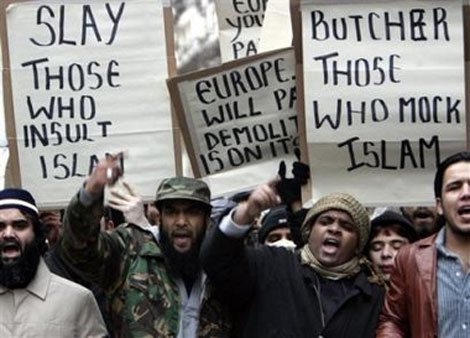
2. Islam as a religion is represented to be ‘against the world’ and therefore punish the world by killing innocent people in their attacks, for example, 9/11 and 7/7.
3. terrorism as an act against the world is shown to represent the whole religion of Islam.
4. Islam is constantly in the media spotlight, even in non commercial television channels such as BBC, and it is heavily scrutinised and portrayed to teach its young followers to effectively 'teach he world a lesson'- during a lecture by head speakers of Islamic communities.
5. in comedy movies such as four lions, the protagonists are often shown to be idiotic ans have no sense. they are shown to be forced into terrorism and therefore this stereotypes all Muslim men to be commercially used to create humour within movies.
theories to focus on:
1. cultivation theory
this causes enigma within the audience and then is used to create a false representation of certain minorities. much like the hypodermic needle this moulds wrong stereotypes within reality, and diminishes communities.
2. copycat modelling
although we can assume that terrorism in some movies is shown in a comedic light, it is also possible that people will imitate what they see in the media. they may resort to terrorism or other acts of extremism.
3. hypodermic needle theory
The ‘injected’ audience is seen as passive and powerless. whilst watching the negative portrayal of Islamic believers, the audience is likely to cause moral panic and create stereotypes within reality and label all Muslims as terrorists.
4. uses and gratifications theory
Instead of researching what the media do to the audience, this approach studies what the audience does with the media. This approach also takes account of people’s personalities and personal needs. this may also cause havos in sociery, if yougher viewers decide to act upon illegal activites.
1. post 9/11 and the media
2. representation and sterotyping

http://www.dailymail.co.uk/news/article-403010/Stereotyping-leading-terror-says-Muslim-Miss-England.html
http://news.bbc.co.uk/democracylive/hi/europe/newsid_9097000/9097203.stm
3. media effects on the audience
http://www.bookrags.com/essay-2005/3/27/203410/697

4. gender and ethnicity
http://www.colorq.org/PetSins/article.asp?y=2006&m=7&x=7_1

5. liberal plurism
points to be made in the critical investigation:
1. males are portrayed to be terrorists and stereotypically violent, aggressive and oppressive.
2. Islam as a religion is represented to be ‘against the world’ and therefore punish the world by killing innocent people in their attacks, for example, 9/11 and 7/7.
3. terrorism as an act against the world is shown to represent the whole religion of Islam.
4. Islam is constantly in the media spotlight, even in non commercial television channels such as BBC, and it is heavily scrutinised and portrayed to teach its young followers to effectively 'teach he world a lesson'- during a lecture by head speakers of Islamic communities.
5. in comedy movies such as four lions, the protagonists are often shown to be idiotic ans have no sense. they are shown to be forced into terrorism and therefore this stereotypes all Muslim men to be commercially used to create humour within movies.
theories to focus on:
1. cultivation theory
this causes enigma within the audience and then is used to create a false representation of certain minorities. much like the hypodermic needle this moulds wrong stereotypes within reality, and diminishes communities.
2. copycat modelling
although we can assume that terrorism in some movies is shown in a comedic light, it is also possible that people will imitate what they see in the media. they may resort to terrorism or other acts of extremism.
3. hypodermic needle theory
The ‘injected’ audience is seen as passive and powerless. whilst watching the negative portrayal of Islamic believers, the audience is likely to cause moral panic and create stereotypes within reality and label all Muslims as terrorists.
4. uses and gratifications theory
Instead of researching what the media do to the audience, this approach studies what the audience does with the media. This approach also takes account of people’s personalities and personal needs. this may also cause havos in sociery, if yougher viewers decide to act upon illegal activites.
Thursday, 11 November 2010
5 things to focus on during the critical investigation and question
1. post 9/11 and the media
2. representation and stereotyping
3. media effects on audience
4. gender and ethnicity
5. liberal pluralism
How has the media industry profited from the glamourisation of Islam and terrosism?
2. representation and stereotyping
3. media effects on audience
4. gender and ethnicity
5. liberal pluralism
How has the media industry profited from the glamourisation of Islam and terrosism?
The hypodermic model
Just like the syringe used to inject a drug into a body, the media ‘injects’ messages directly into the minds of the viewers/listeners/readers; and they can be as addictive as heroin.
This approach draws attention to the power that media producers have, and to the importance of the forms of media to which audiences have access.
The ‘injected’ audience is seen as passive and powerless. This model is mostly used when the effects of media on women or children are the subject of research. The way people use media remains unaccounted for.
Cultivation theory
As audiences watch more and more film and television, they gradually develop certain views about the world, some of which are ‘false’.
This approach draws attention to the fact that audiences gain a lot of their knowledge about the world from the media. It also recognises the important role the media have in our lives.
This approach can encourage views such as: ‘Crimewatch feeds perceptions that Britain’s crime rate is growing’ while not actually measuring this idea against the actual views of audience members. In other words, it’s hard to prove accurately.
Copycat(or modelling) theory
This approach suggests that people will imitate what they see in the media – e.g. if young people watch Natural Born Killers, they will go out on a killing
spree. This is not so much a ‘theory’ as an assumption perpetuated by the Press!
The power of this approach is that it feeds off (and mirrors) the types of concerns that parents have about their kids’ media use. It might encourage parents to stop their children from playing violent computer games, for example.
Firstly: different people see different levels of ‘risk’ in different media! So one person’s threat is another person’s light evening entertainment ... Secondly: while short term effects might be measurable, it is hard to measure long term effects of this kind. This is often the basis for moral panics
– e.g. rap music leads to gun violence.
Uses and gratifications
Instead of researching what the media do to the audience, this approach studies what the audience does with the media. This approach also takes account of people’s personalities and personal needs.
The audience is seen as active, and reasonably intelligent. Life experience in general is regarded as more influential than experience of media. The pleasures that the media offer audiences are not regarded as
negative!
Too much optimism about the ‘power’ and ‘choices’ of an active
audience can distract us from the power certain texts have, or the influence that media institutions and ownership may have on texts
and understandings.
Just like the syringe used to inject a drug into a body, the media ‘injects’ messages directly into the minds of the viewers/listeners/readers; and they can be as addictive as heroin.
This approach draws attention to the power that media producers have, and to the importance of the forms of media to which audiences have access.
The ‘injected’ audience is seen as passive and powerless. This model is mostly used when the effects of media on women or children are the subject of research. The way people use media remains unaccounted for.
Cultivation theory
As audiences watch more and more film and television, they gradually develop certain views about the world, some of which are ‘false’.
This approach draws attention to the fact that audiences gain a lot of their knowledge about the world from the media. It also recognises the important role the media have in our lives.
This approach can encourage views such as: ‘Crimewatch feeds perceptions that Britain’s crime rate is growing’ while not actually measuring this idea against the actual views of audience members. In other words, it’s hard to prove accurately.
Copycat(or modelling) theory
This approach suggests that people will imitate what they see in the media – e.g. if young people watch Natural Born Killers, they will go out on a killing
spree. This is not so much a ‘theory’ as an assumption perpetuated by the Press!
The power of this approach is that it feeds off (and mirrors) the types of concerns that parents have about their kids’ media use. It might encourage parents to stop their children from playing violent computer games, for example.
Firstly: different people see different levels of ‘risk’ in different media! So one person’s threat is another person’s light evening entertainment ... Secondly: while short term effects might be measurable, it is hard to measure long term effects of this kind. This is often the basis for moral panics
– e.g. rap music leads to gun violence.
Uses and gratifications
Instead of researching what the media do to the audience, this approach studies what the audience does with the media. This approach also takes account of people’s personalities and personal needs.
The audience is seen as active, and reasonably intelligent. Life experience in general is regarded as more influential than experience of media. The pleasures that the media offer audiences are not regarded as
negative!
Too much optimism about the ‘power’ and ‘choices’ of an active
audience can distract us from the power certain texts have, or the influence that media institutions and ownership may have on texts
and understandings.
Sunday, 3 October 2010
Four Lions notes
Clothing is Pakistani robes for men stereotypical of the Asian Muslim people.
Props included bombs and guns- which confirms suspicions of terrorism
Setting of some scenes are in Pakistan, near Al Qaeda head quarters
Non Hollywood production, Film4 production
Not much marketing in terms of trailers, posters or publicity
Low budget, Art house characteristics
Comedy, drama
Themes of terrorism, friendship and religion
Social downfalls highlighted within society, this is tragic
Women are shown to take orders
The production stereotypes ALL Muslim men to be extremists
Misrepresentation of the religion
Men and women aged 16-50, middle class to working class
C2, D, E
Succeders- people that seek control (terrorists)
Strugglers- escapism is needed from reality
All backgrounds may watch, however may offend Muslim people
Watch production for entertainment, escapism
Likely to cause moral panic
Targeted towards religion of Islam
For a multi-cultural society where light racism is acceptable
The movie is aimed at political change, and to encourage social change towards religions
Targeted towards religion of Islam
For a multi-cultural society where light racism is acceptable
The movie is aimed at political change, and to encourage social change towards religions
Props included bombs and guns- which confirms suspicions of terrorism
Setting of some scenes are in Pakistan, near Al Qaeda head quarters
Non Hollywood production, Film4 production
Not much marketing in terms of trailers, posters or publicity
Low budget, Art house characteristics
Comedy, drama
Themes of terrorism, friendship and religion
Social downfalls highlighted within society, this is tragic
Women are shown to take orders
The production stereotypes ALL Muslim men to be extremists
Misrepresentation of the religion
Men and women aged 16-50, middle class to working class
C2, D, E
Succeders- people that seek control (terrorists)
Strugglers- escapism is needed from reality
All backgrounds may watch, however may offend Muslim people
Watch production for entertainment, escapism
Likely to cause moral panic
Targeted towards religion of Islam
For a multi-cultural society where light racism is acceptable
The movie is aimed at political change, and to encourage social change towards religions
Targeted towards religion of Islam
For a multi-cultural society where light racism is acceptable
The movie is aimed at political change, and to encourage social change towards religions
Sunday, 12 September 2010
media values and ideologies
The major values and ideologies of this production, overall cast a negative light on the Muslim society. This film seems to stereotypes all Muslims to be crazed terrorists. This enables the audience to assume that, although watching a comedy, the religion of Islam is corrupt- enforcing racism within society- adding to recent commotion about silly political highlights and past terror attacks, such as 7/7 and 9/11.
The film aims to teach the audience that even though extremists may exist in certain religions- the non extremists whom are law abiding are wrongly being persecuted for crimes they are not committing, however are still stereotypically being cursed for.
The film aims to teach the audience that even though extremists may exist in certain religions- the non extremists whom are law abiding are wrongly being persecuted for crimes they are not committing, however are still stereotypically being cursed for.


Narrative
the narrative of the film is in chronological order as it shows the journey travelled by the five men to blow themselves up in the name of their god. as they decide how they going to die, one of the men die by accident, from there the film takes its title- four lions. this also structures the film as it enables the audience to start a countdown as to whom will die first, how and when.
you could say that the terrorists claim to be the heroes in the eyes of their religion, but in reality they are the villains. they cause the damage in the name of their god- although having been told not to, in addition, at one point one of the men plans to bomb his own local mosque- the on he visits- whilst his friends father is inside.
in terms of the protagonists and identity, as the men plan to kill themselves to please each other, some decide they no longer wish to waste their life and that they should no longer deserve to be pushed into an act they are so deadly against. with hesitancy being a theme toward the end of the film from the protagonists- alienation starts to take place. this has the same effect in the audience- should they forgive the men knowing these acts happen in reality, or should the audience be relieved that they doubt themselves and die an unfortunate and unwilling death.
sounds such as police sirens going off causes panic- however especially when a few bombs have gone off before, this along with the fast paced editing and cuts emphasises the panic and need of stability for the audience watching, but especially for the terrorist attack victims. these effects in any other film would cause distress but due to the film being of the comedy genre the audience are re assured that a harmless ending will entail.
you could say that the terrorists claim to be the heroes in the eyes of their religion, but in reality they are the villains. they cause the damage in the name of their god- although having been told not to, in addition, at one point one of the men plans to bomb his own local mosque- the on he visits- whilst his friends father is inside.
in terms of the protagonists and identity, as the men plan to kill themselves to please each other, some decide they no longer wish to waste their life and that they should no longer deserve to be pushed into an act they are so deadly against. with hesitancy being a theme toward the end of the film from the protagonists- alienation starts to take place. this has the same effect in the audience- should they forgive the men knowing these acts happen in reality, or should the audience be relieved that they doubt themselves and die an unfortunate and unwilling death.
sounds such as police sirens going off causes panic- however especially when a few bombs have gone off before, this along with the fast paced editing and cuts emphasises the panic and need of stability for the audience watching, but especially for the terrorist attack victims. these effects in any other film would cause distress but due to the film being of the comedy genre the audience are re assured that a harmless ending will entail.
media languages and forms
the characters as a whole, along with the themes of the film connote that all terrorists are madly in love with religion despite knowing deep down what they do is bad. admittedly, they agree that murder is a sin, however calling a murder a sacrifice makes it OK.
the process of the bomb making and the props, for example, raw materials denote that the characters are pursuing to cause damage. also, actions that occur through out the film denote that they don't actually know what they are doing- and therefore this connotes disaster. basically, on that fact alone lies the connotations of the whole production. it is a hap hazard guide to stupid criminals whom believe they are god.
Having already touched upon the silliness of the characters this is also connoted by the characters facial expressions when fazed by questions. for example, one character takes a picture of his face to re assure him self the is not showing his ' not confused face'- as he calls it. in terms of clothing, the majority of the public can identify the ethnicity of the protagonists and then further to learn of their religion. this deliberate hint for the audience denotes that the men are Muslim as they prey at a mosque and wear their religious robes.
the significance of the mise en scene enables the audience to identify with the problem of terrorism due to past events such as 7/7. London is a place where the production is shot and thereof ore evokes enigma codes from the audience, for example, is the point of this production to focus mainly on 7/7? Additionally, the language used in some of the scenes also encourages the audience to guess the religion and nationality of the characters- backed by the clothing and stereotypical props.
in terms of the soundtrack it is Avril 14th by Aphex Twin. this causes binary oppositions to occur as the film is about destroying places, lives and happiness- and therefore such a peaceful song encourages emotions of happiness and sadness to unite whilst watching this humorous tragedy.
camera angles are more or less used to show the humour of the tragedies when bombs are going off or when unfortunate events are about to unfold. some camera tricks such as night vision add a sense of police environment. additionally, the start of the film is recorder through a hand held camera. this is shown ton purpose as the audience soon realise that the men are terrorists with guns and the typical sheet behind them- as shown in real life terrorist films.
the process of the bomb making and the props, for example, raw materials denote that the characters are pursuing to cause damage. also, actions that occur through out the film denote that they don't actually know what they are doing- and therefore this connotes disaster. basically, on that fact alone lies the connotations of the whole production. it is a hap hazard guide to stupid criminals whom believe they are god.
Having already touched upon the silliness of the characters this is also connoted by the characters facial expressions when fazed by questions. for example, one character takes a picture of his face to re assure him self the is not showing his ' not confused face'- as he calls it. in terms of clothing, the majority of the public can identify the ethnicity of the protagonists and then further to learn of their religion. this deliberate hint for the audience denotes that the men are Muslim as they prey at a mosque and wear their religious robes.
the significance of the mise en scene enables the audience to identify with the problem of terrorism due to past events such as 7/7. London is a place where the production is shot and thereof ore evokes enigma codes from the audience, for example, is the point of this production to focus mainly on 7/7? Additionally, the language used in some of the scenes also encourages the audience to guess the religion and nationality of the characters- backed by the clothing and stereotypical props.
in terms of the soundtrack it is Avril 14th by Aphex Twin. this causes binary oppositions to occur as the film is about destroying places, lives and happiness- and therefore such a peaceful song encourages emotions of happiness and sadness to unite whilst watching this humorous tragedy.
camera angles are more or less used to show the humour of the tragedies when bombs are going off or when unfortunate events are about to unfold. some camera tricks such as night vision add a sense of police environment. additionally, the start of the film is recorder through a hand held camera. this is shown ton purpose as the audience soon realise that the men are terrorists with guns and the typical sheet behind them- as shown in real life terrorist films.
Subscribe to:
Posts (Atom)